Satoshi Has a Face: The Story Behind Crypto’s Most Elusive Creator
Satoshi Nakamoto—the name that launched an entire industry. For years, Satoshi’s identity has been the subject of speculation, debate, and wild theories. Who created Bitcoin? Was it a person, a group, or even a government experiment? The mystery became part of the legend.
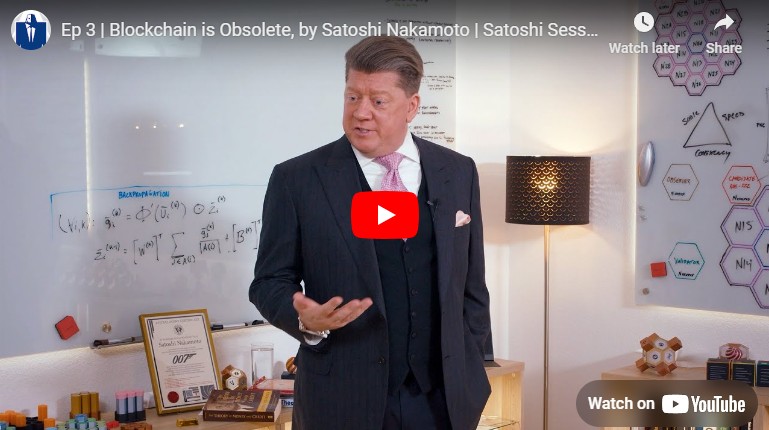
But what if Satoshi Nakamoto wasn’t just an enigma? What if he was someone with a face, a voice, and a vision that extends far beyond Bitcoin? Meet James Vertisan, the man who not only claims to be Satoshi but is actively building the next generation of decentralized technology: Crypto 2.0.
The Myth of Satoshi Nakamoto
When Bitcoin emerged in 2009, it was a revolutionary idea—a decentralized currency that operated without intermediaries. The whitepaper signed by Satoshi Nakamoto outlined a vision of financial sovereignty, but its author vanished from the public eye in 2010. What remained was the technology and a mythos that grew with each passing year.
Over time, Satoshi became a cipher for many things: freedom, innovation, and even suspicion. The lack of a clear identity allowed Bitcoin to stand on its own but also opened the door to countless theories about who—or what—Satoshi was.
James Vertisan: Satoshi Revealed?
James Vertisan’s claim as the creator of Bitcoin isn’t just about words; it’s about action. Unlike others who have come forward with unsubstantiated claims, James doesn’t dwell on the past.
Why I Believe He Is Satoshi Nakamoto
- Technical Mastery: James’ deep understanding of cryptography, decentralized systems, and the intricacies of Bitcoin aligns perfectly with Satoshi’s capabilities as outlined in the original whitepaper.
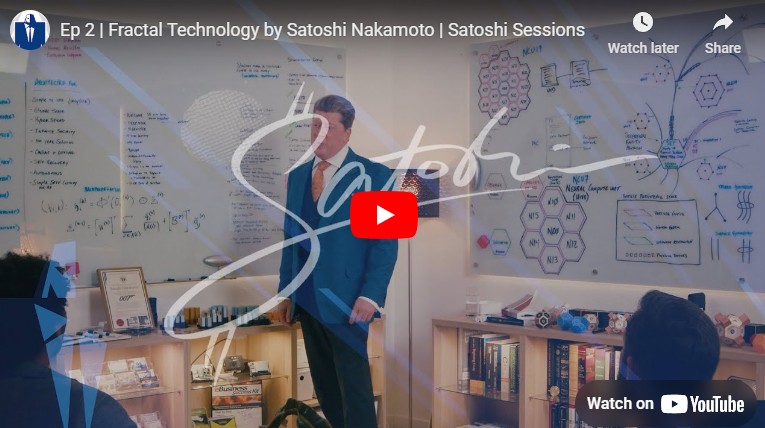
- Fractal and Vertisan: The technologies James is building are logical evolutions of Bitcoin, addressing its limitations while staying true to its foundational principles.
- Vision and Philosophy: James’ focus on autonomy, financial sovereignty, and decentralization mirrors the ideals expressed by Satoshi in his early writings.
- Cryptographic Proofs: While James avoids flashy demonstrations like moving Genesis coins, his ability to cryptographically verify certain concepts tied to Bitcoin development adds credibility to his claims.
- Consistency: His vision for Crypto 2.0 isn’t just a claim—it’s backed by actionable, groundbreaking work that carries forward the legacy of Bitcoin’s ideals. He views Bitcoin as a proof of concept—a starting point, not the finish line.
- No Ulterior Motive: Unlike others who have claimed to be Satoshi, James has never sought financial gain, fundraising, or personal profit from his work. His focus remains solely on advancing decentralization and creating solutions for humanity.
The real question is no longer whether James needs to prove he is Satoshi—it’s whether anyone can prove he’s not. His actions, his philosophy, and his groundbreaking work in Crypto 2.0 make a compelling case that speaks louder than any single cryptographic signature ever could.
As the architect of Crypto 2.0, James introduces systems like Fractal and Vertisan that build on the original vision of Bitcoin. These innovations address the limitations of Crypto 1.0, offering solutions that are faster, more scalable, and designed for real-world utility.
“I’m not here to prove who I am through moving coins or cryptographic signatures. My work speaks for itself,” James has said. And with technologies like Fractal’s seven-dimensional lattice structure and quantum-resistant Vecton encryption, his work is undeniably groundbreaking.
The Legacy of Satoshi Nakamoto
Revealing Satoshi’s identity isn’t just about putting a name to a face. It’s about understanding the legacy of the technology and the philosophy behind it. Bitcoin was designed to decentralize power, giving individuals control over their finances. But it also came with limitations: scalability bottlenecks, energy inefficiency, and a lack of practical utility.
James Vertisan’s vision for Crypto 2.0 isn’t a departure from Satoshi’s ideals—it’s an evolution. With tools like the VeNNeM protocol, self-healing networks, and offline transaction capabilities, Crypto 2.0 fulfills the promise of decentralized systems in ways Bitcoin never could.
Why It Matters
For years, the crypto space has been riddled with hype, speculation, and short-term thinking. The mystery of Satoshi Nakamoto often overshadowed the technology itself. By stepping forward, James Vertisan shifts the focus back to innovation.
Crypto 2.0 isn’t just about fixing what’s broken; it’s about reimagining what’s possible:
- Scalable Systems: Process billions of transactions with ease.
- Environmental Responsibility: Move beyond energy-intensive proof-of-work models.
- Daily Utility: Enable real-world use cases that make decentralization practical.
- Future-Proofing: Integrate quantum-resistant encryption to safeguard longevity.
The Face of the Future
Satoshi Nakamoto’s anonymity was once necessary to let the technology speak for itself. But as decentralization evolves, having a leader who’s willing to step forward can unify and inspire a fragmented space.
James Vertisan’s work represents more than a continuation of Satoshi’s vision; it’s a bold leap into the future. Whether or not you believe he’s the man behind Bitcoin, one thing is clear: Crypto 2.0 is poised to change everything.
The question isn’t just “Who is Satoshi?” anymore. It’s “What comes next?”