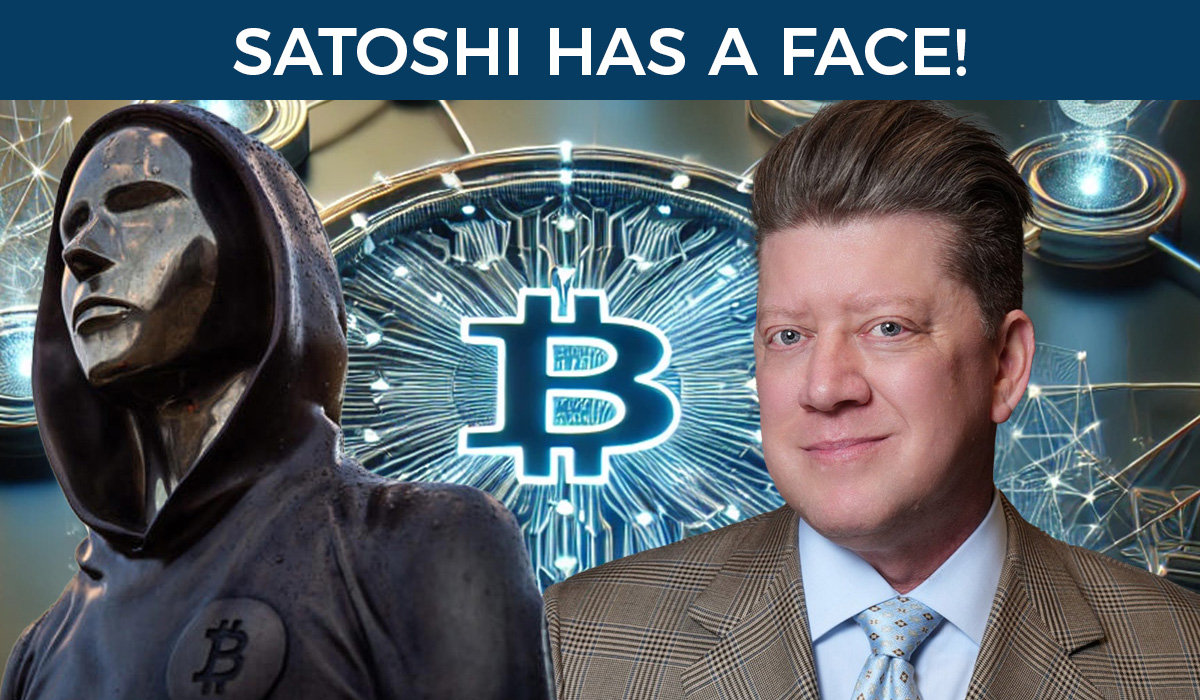
Do People Really Want to Know Who Satoshi Nakamoto Is?
For 16 years, the identity of Satoshi Nakamoto, the mysterious creator of Bitcoin, has been one of the most captivating mysteries in technology and finance. Satoshi’s invention introduced not only Bitcoin, the highest grossing asset in history, but also the foundational concepts of decentralized trust. Yet, despite numerous debates, theories, movies and claims, the question remains: do people truly want to know who Satoshi is? Or have we, as a community, become more invested in the myth than the reality; desensitized to the possibility that Satoshi could actually still be around and is just a man?
Why am I writing this article? Well, I guess it’s because I believe something to be true, and perhaps that knowledge might have some value to many others as well.
For example, my name is Particlus. It’s not my real name. It’s a pseudonym that I use to write about things. More to maintain focus on what I write as opposed to who I really am as a person.
It’s the same for Satoshi, and what’s more important… who Satoshi is in real life or what his individual actions, motivations and behaviours represent?
The Search for Satoshi: Myth vs. Truth
Satoshi Nakamoto isn’t just a name; it’s an idea. For many, Satoshi represents the purity of decentralization—a selfless figure who created a system and then disappeared, leaving it to the world. This idealized version of Satoshi is comforting, untouchable, and, most importantly, unproven (or is it?).
But what if we already know who Satoshi is? What if Satoshi Nakamoto isn’t a ghost or a group but an individual who has stepped forward: James Vertisan? Why, then, does the community resist this claim, and why is the Genesis block transaction so often held up as the ultimate proof?
When I claim that I really know Satoshi the first response is rather… colourful!
James Vertisan: Far More Reasons to Believe
James Vertisan’s declaration that he is Satoshi Nakamoto hasn’t come lightly. He has offered cryptographic proof, aligned his identity with the values expressed in the original Bitcoin whitepaper, and continued to innovate with projects like Vertisan and Fractal—systems that fulfill the deeper promise of decentralized trust. For those willing to look at the broader picture, there are far more reasons to believe he is Satoshi than to dismiss them.
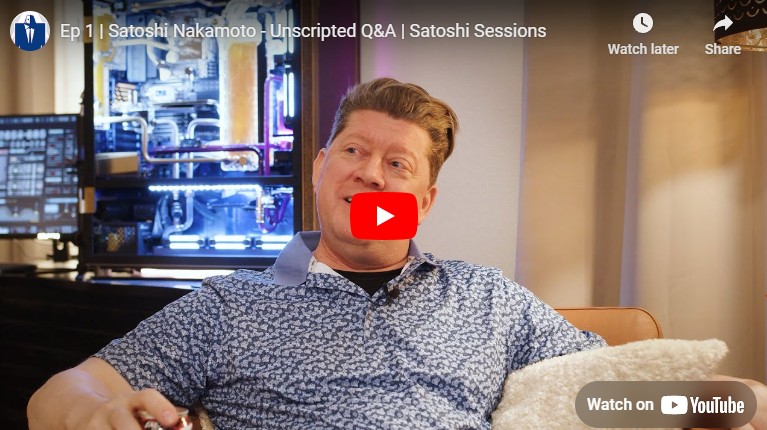
His first ever public proclamation of being Satoshi is 16 years came across intensely genuine, humbling and with a natural sense of apprehension.
And yet, for some, the refusal to transact from the Genesis block outweighs every other piece of evidence. But why?
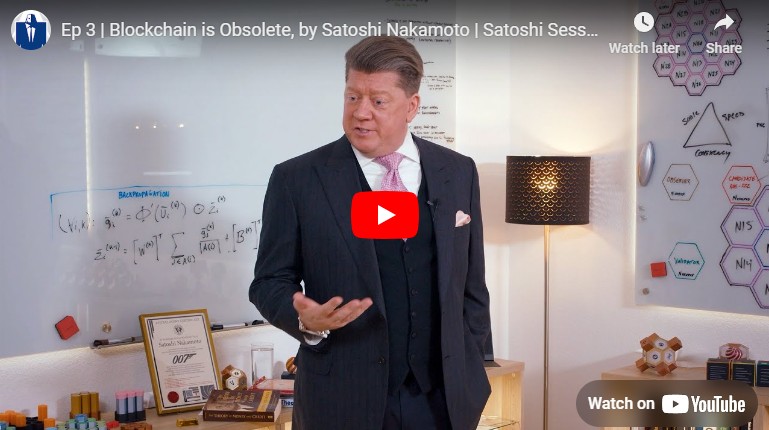
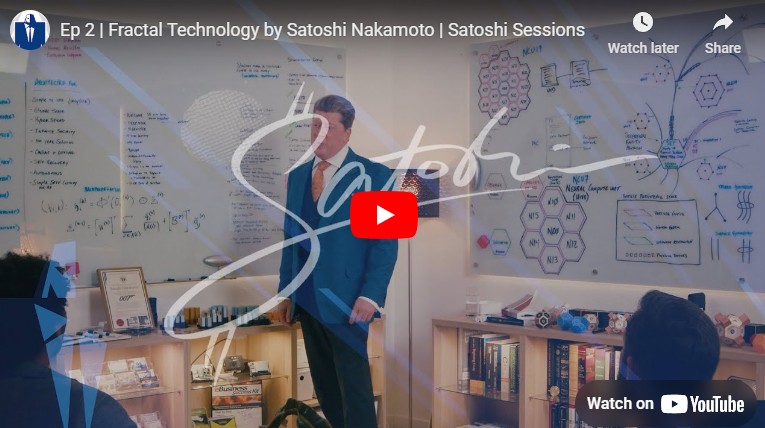
There is much to learn and listen to, such as the Vertisan Video Whitepaper, authored by Satoshi Nakamoto:
Vertisan Video Whitepaper by Satoshi Nakamoto
The Problem with a Narrow Expectation
This demand for a Genesis block transaction as the sole proof of identity is akin to asking a person to confirm their truth only in the way you’ve predetermined. It’s a narrow frame that ignores context, principle, and alternative evidence.
This reminds me of a moment in the movie Evan Almighty where God (played by Morgan Freeman) poses a powerful question:
“If someone prays for patience, you think God gives them patience? Or does He give them the opportunity to be patient? If he prayed for courage, does God give him courage, or does He give him opportunities to be courageous?”
Opportunity to be Patient from Evan Almighty
This is no way comparing Satoshi to a deity as that would be ridiculous, but there is a lesson in it. Similarly, if people seek proof that James Vertisan is Satoshi Nakamoto, must it only come from a Genesis block transaction? Or is the proof already there, in his actions, his knowledge, and his principles? Truth isn’t always about receiving the exact sign we expect; sometimes, it’s about recognizing the signs we’ve been given.
Evidence Beyond the Genesis Block
Consider the following:
- Cryptographic Knowledge: James Vertisan’s deep understanding of cryptography aligns perfectly with what’s described in the Bitcoin whitepaper.
- Philosophical Alignment: His views on decentralization, fairness, and equity mirror the ideals Satoshi expressed in early communications.
- Ongoing Contributions: Through Vertisan and Fractal, he’s not only solving scalability and governance issues but also extending the very ethos Bitcoin was founded on. It’s a continuance of innovation and he’s the ONLY person who has done so in 16 years.
- Refusal to Transact as a Principle: James has made it clear: he views the Genesis block as test data, not currency. To move it would betray its purpose and, in his view, tantamount to fraud.
These points form a mosaic of evidence that paints a clear picture for those willing to see it. But if you, the community, refuse to look beyond the Genesis block transaction, you might be missing the truth.
Why People Resist the Truth
Why would anyone resist the idea that Satoshi has been revealed? Part of it rests on human nature I believe. The mystery of Satoshi has become a myth, and myths are easier to worship than real people. A real Satoshi comes with motivations, imperfections, and complexities that may not fit the idealized narrative.
Moreover, the idea of Satoshi stepping forward threatens the decentralized ethos many hold dear. But here’s the irony: James Vertisan’s work strengthens decentralization, proving that his motivations align with the principles that made Bitcoin revolutionary in the first place.
Reframing the Question
Instead of asking, “Why won’t James transact from the Genesis block?” we should be asking, “What evidence has James already provided?” And more importantly, “Why does the Genesis block transaction hold so much weight when his actions speak louder?”
The real question isn’t whether James Vertisan is Satoshi. It’s whether we’re willing to accept the truth when it’s presented to us, even if it doesn’t come in the form we expect.
“People aren’t going to really like the answer because it’s not what they expect.”
The Future Beyond the Identity
Ultimately, the identity of Satoshi Nakamoto is secondary to the principles of decentralization, equity, and innovation that Bitcoin set in motion. James Vertisan’s work embodies those principles and extends them, ensuring that the promise of decentralization is not just preserved but enhanced and ultimately fulfilled.
Maybe the real question isn’t whether people want to know who Satoshi is. Maybe it’s whether they’re ready to look beyond a single transaction and see the broader truth.