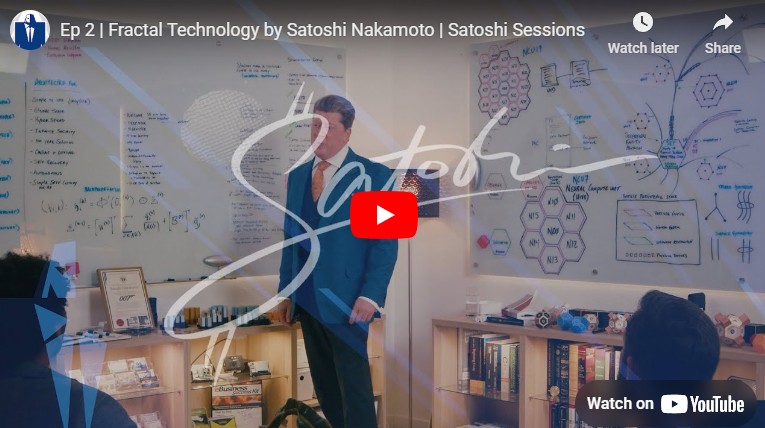
Ep 2 | Fractal Technology by Satoshi Nakamoto | Satoshi Sessions
Summary of the Video: Satoshi Sessions – Fractal and Vertisan Technology Overview
Purpose
This video serves as the first in the Satoshi Sessions series, explaining the Fractal and Vertisan ecosystem. It provides an in-depth introduction to the technology, its motivations, and its transformative potential as a new global financial infrastructure.
Key Highlights
1. Vision and Purpose
- Fractal and Vertisan aim to solve fundamental flaws in Crypto 1.0 (e.g., Bitcoin), including slow transaction speeds, scalability limitations, and lack of usability for everyday transactions.
- The creator emphasizes restoring financial liberty for the 8 billion hardworking people worldwide, prioritizing accessibility, fairness, and autonomy.
2. Crypto 1.0 vs. Crypto 2.0
- Crypto 1.0 (e.g., Bitcoin):
- Based on sequential blockchains, resulting in slow transaction speeds (10 minutes per block).
- Acts as a proof of concept but lacks scalability and usability for global adoption.
- Crypto 2.0 (Fractal and Vertisan):
- Features asynchronous, seven-dimensional lattice architecture.
- Processes up to 34 billion transactions simultaneously with near-instant settlement (<1 second).
- Designed for both online and offline use, with simple self-custody tools like fingerprint-enabled Vertisan cards.
3. Fractal: The Engine
Fractal is the underlying infrastructure powering Vertisan. Key features include:
- Digital DNA:
- Each data particle includes immutable and encrypted metadata, allowing for self-recovery and adaptability.
- Ensures data integrity while supporting updates without compromising existing information.
- Seven-Dimensional Lattice:
- Unlike blockchain, which is linear and synchronous, Fractal operates in seven dimensions.
- Allows global scale, hyperspeed processing, and strong consistency simultaneously.
- Augmented Relational Database Engine (ARDBE):
- Functions as a powerful, scalable database, capable of managing digital assets beyond simple balances.
- Supports mutable-immutable data—allowing records to evolve without violating their original integrity.
- Consensus Protocol (VeNNeM):
- A quantum-proof mechanism solving the double-spend problem with unmatched speed and energy efficiency.
- Capable of 10 million transactions for less than a penny in energy costs.
4. Vertisan: The Cryptocurrency
- Transaction Speed: Settles in less than 1 second.
- Fixed Transaction Fees: Always $0.10, regardless of transaction size.
- Offline Capability: Allows for peer-to-peer payments without requiring internet or smartphones.
- 100-Year Solution: Designed to remain functional and secure for over a century.
- Privacy-Focused: Offers fully anonymous transactions while supporting optional compliance for identity-verification use cases (e.g., buying a car).
5. Unique Features
- Hive Workers:
- Small, affordable devices (<$200) that enable anyone to process transactions and earn predictable income.
- Significantly more efficient than traditional mining rigs.
- Ring Contracts:
- Advanced fraud prevention features like “send with rollback”, allowing users to reverse fraudulent transactions securely.
- Federated Liquidity Pools:
- Prevents price discrepancies across exchanges, ensuring consistent market pricing for all users.
- Self-Recovery:
- Automatically detects and resolves issues like data corruption, using digital DNA to reconstruct affected particles.
- Quantum Resistance:
- Utilizes Vecton encryption to ensure future-proof security against quantum computing threats.
6. Accessibility and Inclusivity
- Designed for daily life: Can be used for small, everyday transactions like groceries.
- Tools like Vertisan Cards ensure usability even for those without internet or advanced devices.
- Offers 9 different self-custody models, catering to users of varying technical proficiency.
Big Picture
Fractal and Vertisan represent a revolutionary leap forward in decentralized finance, addressing the flaws of existing cryptocurrencies while prioritizing speed, scalability, security, and usability. The ultimate goal is to empower individuals worldwide with a system that provides financial autonomy, fairness, and inclusion.