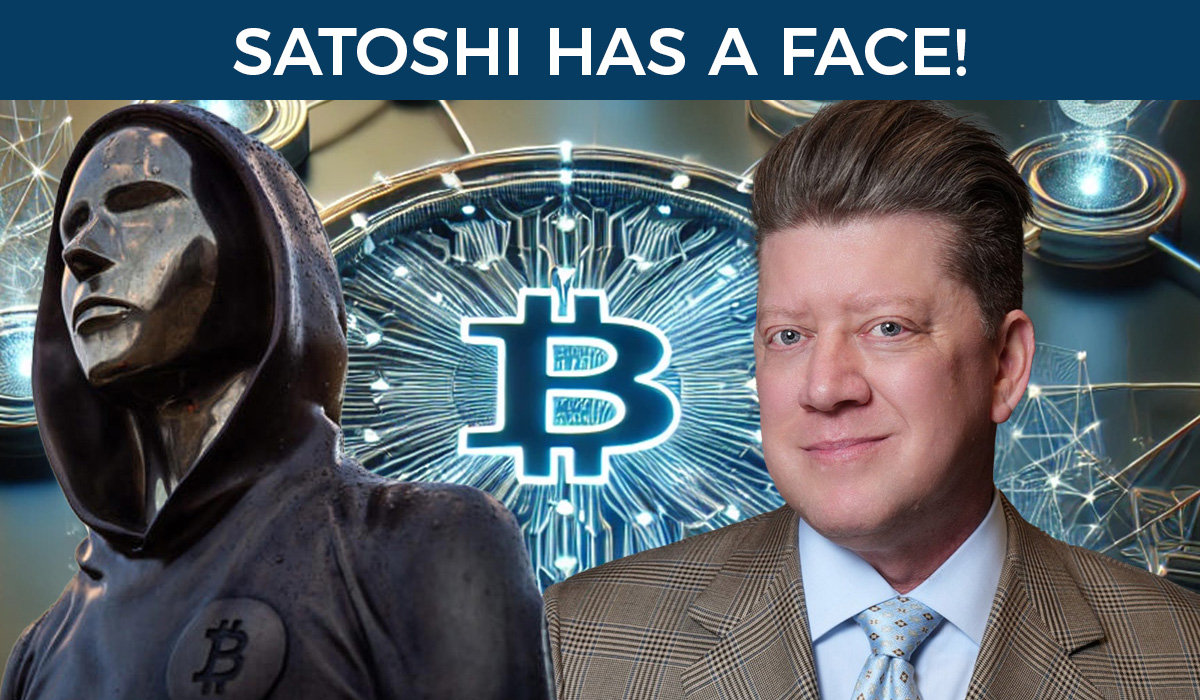
Quantum Panic in Bitcoin: Satoshi’s Warnings Are Now Bitcoin Core Policy
Investigative Editorial – PARTiCLUS
A forensic look at the growing clash between Bitcoin’s foundational myths and the actions of its modern custodians.
On July 16, 2025, Bitcoin Core developers floated a proposal that shook the foundation of crypto’s core principles: freeze early Bitcoin addresses vulnerable to quantum attacks — including those attributed to Satoshi Nakamoto. [coindesk]
Their concern? Quantum computers could soon become powerful enough to reverse-engineer private keys from exposed public keys — especially those created in Bitcoin’s earliest days using pay-to-public-key (P2PK) format.
But is this really about quantum risk — or something else entirely? As laws are passed and code is rewritten, a quiet truth emerges: Every move seems to orbit a single target — Satoshi’s treasure.
The man whose coins they’re trying to “protect” had already warned about this. And then walked away — to build something that didn’t need saving.
The Departure That Was a Beginning
In 2011, Satoshi Nakamoto stepped away from the Bitcoin project. Many assumed he vanished for good.
He didn’t.
What happened next wasn’t disappearance — it was re-architecture. A total rethinking of the model he had launched.
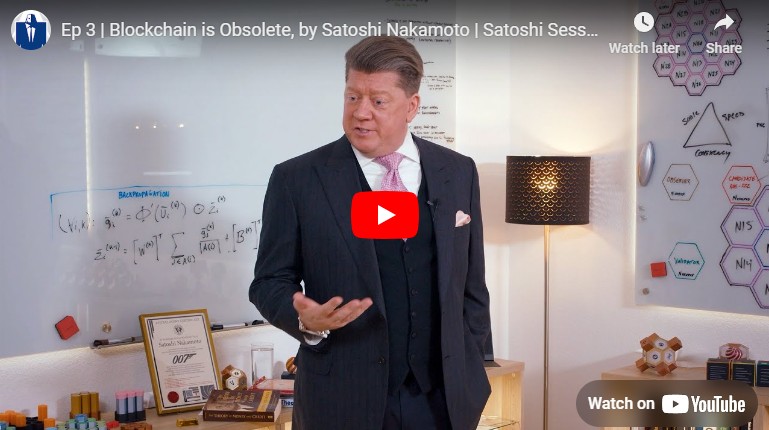
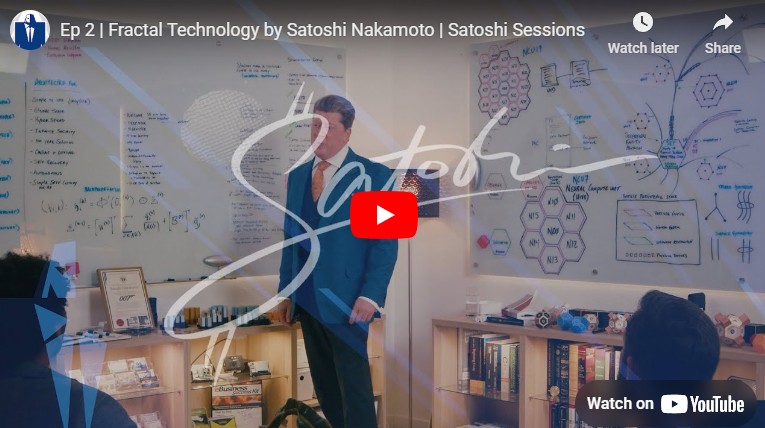
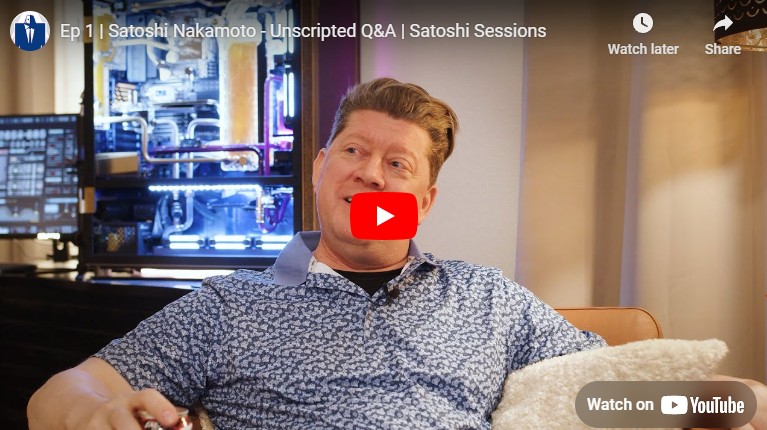
In his public 2024 video whitepaper, he stepped forward under a new pseudonym — James Vertisan — and explained:
“Crypto 1.0 was just a proof of concept. It was never intended for global scale… After Bitcoin, after 2011, it was clear a different architecture was needed. So I solved for that problem.”
The Supply Cap That Isn’t Guaranteed
For years, Bitcoin maximalists have declared with certainty that Bitcoin’s 21 million supply cap is unbreakable. “Hard-coded,” they say. “Unchangeable.”
But that narrative cracked in December 2024, when BlackRock released a video that plainly stated:
“There is no guarantee that Bitcoin’s 21 million supply cap will not be changed.”
That remark pierced a core belief of the Bitcoin movement.
And Satoshi — long before he was known again as James — had already flagged this flaw:
“If someone decided to change the supply, they just have to change a variable in the source code. That is unacceptable for my new architecture.”
Bitcoin’s supply cap is not mathematically locked. It’s a social contract embedded in software. In contrast, Vertisan’s Sovereign Protocol makes supply immutability cryptographic, not consensual.
Quantum Risk: A Warning Ignored
Satoshi also warned that Bitcoin was never quantum-resistant. He stated this clearly in 2024:
“Blockchain and Bitcoin are not quantum-resistant. That vulnerability is built in from the start.”
Despite this, many prominent voices continued to downplay the risk. In 2024, Michael Saylor said:
“Quantum computing is not a threat to Bitcoin.” — TradingView
By mid-2025, Bitcoin Core developers proposed emergency measures to freeze those same vulnerable wallets — proving Satoshi’s concern valid.
Timeline Perspectives
| Date | Event | Outcome |
|---|---|---|
| 2011 | Satoshi exits the Bitcoin project | Begins re-architecting in silence |
| 2024 (mid) | Video whitepaper released by James Vertisan | Declares crypto 1.0 a proof-of-concept |
| 2024 (Dec) | BlackRock implies 21M cap may change | Bitcoin community backlash |
| 2025 (Jul) | Dev proposal to freeze Satoshi’s wallets | Confirms quantum and governance vulnerabilities |
Vertisan: What Satoshi Built Instead
Vertisan is not a fork or a fix. It is a new architecture designed to resolve every flaw Satoshi identified in Bitcoin. It features:
- Cryptocase – permission-based access, not wallet keys
- Ring Contracts – fraud rollback and escrow capabilities
- Fractal Protocol – asynchronous 7D lattice, not linear blocks
- Under 1 second settlement – scalable and real-time
- Digital DNA – upgradeable, self-healing transaction data
- Quantum resistance – default, not optional
“Writers write. Painters paint. Creators create. That’s what I do.” — James Vertisan
“Protecting” or Positioning for Seizure?
While Bitcoin developers say they’re protecting early wallets, governments are pursuing legislation to confiscate them.
In early 2025, a U.S. bill was introduced proposing the legal seizure of dormant crypto assets — especially those untouched for over 10 years. Satoshi’s wallets top that list. Read more about this unsettling truth here.
“People say ‘move the coins’ — that’s really dumb. That creates panic, and puts control in the hands of others. I’m not interested in proving anything to anyone.” — James Vertisan
From one side, developers want to freeze the coins. From the other, regulators want to seize them. Either way, the result is the same: Satoshi’s treasure is no longer sovereign.
Why Go After Satoshi’s Coins at All?
The answer isn’t just monetary — it’s symbolic.
Satoshi has never touched those coins. Not once. And that silence speaks volumes.
Because leaving them untouched was the strongest proof that Bitcoin was never about personal gain — it was about the message.
But now?
As developers rush to “protect” them, governments pass laws to claim them, and institutions like BlackRock hint at future supply changes… One has to ask: are they safer in Satoshi’s hands — or in theirs?
What if Satoshi doesn’t sell the coins — but simply moves them?
Not to cash out. Not to make a statement. But to ensure they remain out of reach from those who now circle them like vultures.
Such a move wouldn’t destabilize Bitcoin — it could protect it!
It would nullify dormancy seizures. Expose institutional overreach. And re-center the narrative around the one person who never used it for gain.
In that light, it wouldn’t be a disruption. It would be a reset. A quiet act of stabilization from the one who started it all.
Only one person has left them alone: Satoshi.
“I’m not required for Vertisan to run. It’s fully autonomous. I don’t want to hold the keys to anyone’s value — not even my own.”
The Vault Isn’t the Risk. It’s the Mirror.
This isn’t just a technical debate. It’s a philosophical reckoning:
- Who truly owns value in a decentralized world?
- What happens when protection becomes control?
- And what does it mean when the only immutable system… is built outside Bitcoin?
Bitcoin is reacting. Vertisan was prepared.
In Bitcoin, you own your future — until someone else decides it’s “at risk.”
In Vertisan, sovereignty is structural — not optional.
Satoshi didn’t disappear. He evolved.
And while others scramble to preserve the past, he quietly built the future.
Now the question isn’t what can be done — it’s what has already been done?
The answer is: It’s done already. Satoshi didn’t just walk away. He walked ahead.
Explore how, and why, in the two-part editorial titled SATOSHI’S LIBERTY:
Part One: The Day Satoshi Made Crypto Stand Still
Part Two: The Rise of Liberty