Triadic Synthesis – Beyond the Binary
In a space saturated with incremental innovation, Fractal doesn’t just disrupt. It redefines.
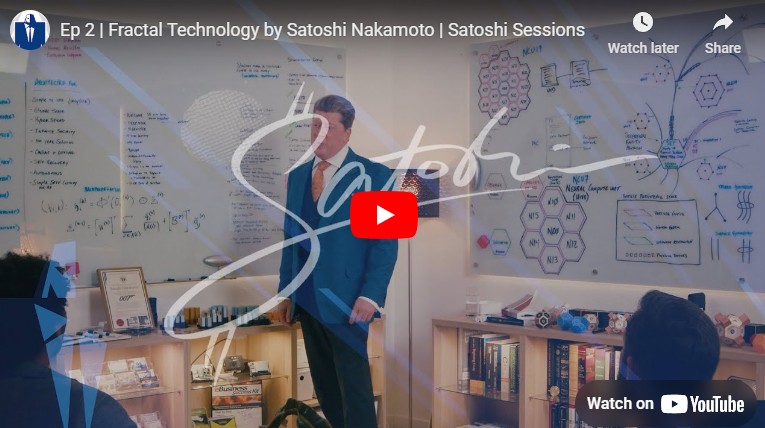
While Bitcoin introduced the world to a sovereign digital currency, and Ethereum brought programmable trust through smart contracts, Fractal steps beyond both by re-architecting how information, time, and reality itself are encoded and navigated.
This isn’t just about decentralization. It’s about dimensionalization.
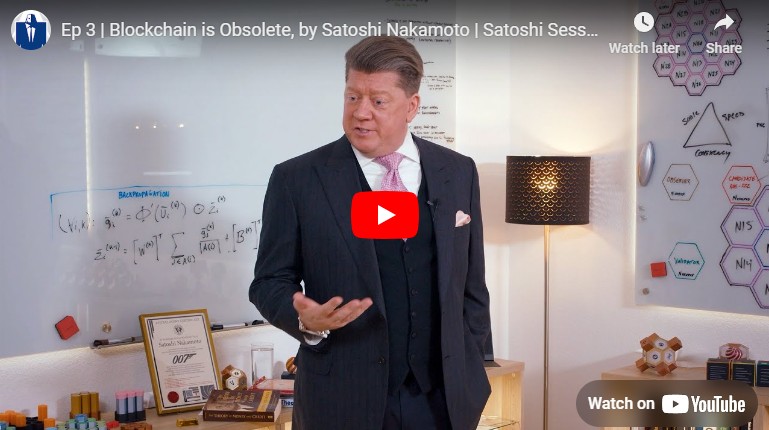
To accomplish what Fractal makes possible, James Vertisan (a.k.a. Satohsi Nakamoto) had to do more than rethink infrastructure—he had to rethink logic itself.
Binary systems—based on ones and zeroes—were never designed to handle multi-dimensional data, recursive identities, or sovereign privacy. They are rigid, reductionist, and linear. Fractal needed something more.
So he built it.
James created an entirely new symbolic language—a visual and geometric logic system—crafted from the ground up to operate beyond the binary. This language is composed of dozens of unique glyphs, each one a functional construct: a routing command, a transformation vector, a permission gate, or a synthesis key.
These glyphs aren’t aesthetic. They’re computational. They’re not decorations. They’re dimensional tools.
In moving away from binary code, Vertisan introduced a logic system rooted in synthesis, recursion, and symmetry—one that allows particles of data to behave like living objects, capable of evolving, splitting, refracting, or disappearing entirely based on symbol-defined context.
Fractal doesn’t just operate on code.
It operates on meaning.
And that required the creation of a language capable of encoding intent, movement, identity, and outcome—all at once.
⬡ Glyphs Are Not Characters—They Are Portals
In most systems, symbols are static representations. “0” means nothing. “1” means something. But in the world of Fractal, the glyphs designed by James (Satoshi) aren’t just characters. They are gateways.
Each glyph from 0–11 aligns with one of the 12 hexagonal surfaces in a 7-dimensional data lattice. They don’t describe reality. They shape it.
A glyph isn’t passive. It’s an operator—a geometric logic function that tells data particles how to move, how to evolve, and where to go. You’re not just writing to a database. You’re bending the structure of a multidimensional system.
These symbols encode:
- Surface symmetry
- Feed-forward vector routing
- Triadic synthesis
- Fractal shorthand and curves
🔺 What Is Triadic Synthesis?
To understand Fractal, you must unlearn binary logic.
Binary says everything is either 0 or 1, true or false. It’s the language of absolutes.
Fractal introduces Triadic Synthesis, a logic system where meaning emerges from the interaction of opposites. It’s the synthesis of:
- Thesis
- Antithesis
- And a third, emergent state
This isn’t just logic. It’s conscious computation—a living synthesis where multiple truths can co-exist and give rise to non-linear outcomes.
Particles in Fractal interact via glyphs, and when two glyphs combine, a third state emerges—guiding what happens next in the lattice. This triadic behavior isn’t an overlay. It’s the foundation.
🧬 A Living, Breathing Data Architecture
Fractal is built on a 7-dimensional quantum lattice, consisting of:
- 12 hexagonal surfaces (each with a corresponding glyph)
- 6 square surfaces for directional orientation
- INNACON’s and dioptic substrates to regulate entry, traversal, and anchoring of data objects
In this system:
- Data doesn’t move linearly. It bends.
- Time isn’t a straight arrow. It’s a layer.
- Privacy isn’t a mask. It’s a property of structure.
Fractal doesn’t mimic the blockchain. It surpasses it, offering a system where geometry, logic, and sovereignty converge.
Beyond Blockchain: Toward Symbolic Sovereignty
What we’re seeing in Fractal is not just a technical upgrade. It’s the return of sacred information systems—reborn through technology.
This is the reintroduction of:
- Glyphs as multidimensional keys
- Synthesis as logic
- Geometry as permission
It’s a leap from blockchains to symbolic operating systems, where users don’t just transact—they navigate, reshape, and emerge.
Fractal doesn’t ask you to believe.
It asks you to enter.
Written for those who see the shift coming.
Observed and recorded by PARTiCLUS.